On this page
AI, Analytics & Future
Explore analytics direction, AI and automation concepts, and the longer-term Nironcare product roadmap.
Analytics Direction
Analytics Direction - Patient experience
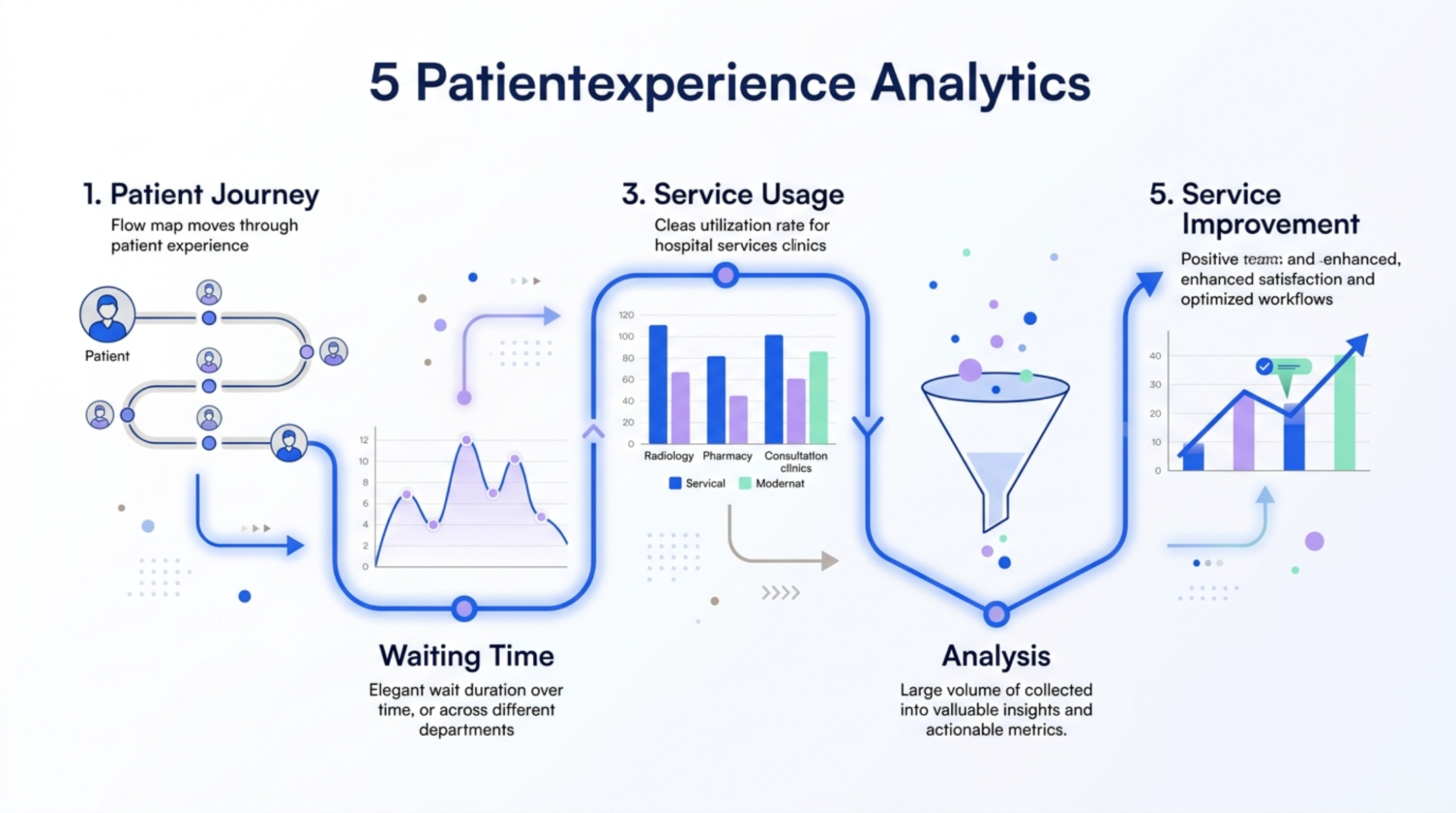
Analytics can be used to understand the patient experience, including patient journeys, waiting times, service usage, and other indicators that help organizations identify opportunities to improve healthcare services. Analytics can help healthcare organizations understand how patients interact with healthcare services.
-
Collect Activity Information -> Gather relevant information from patient journeys and services.
-
Review Patient Journey -> Understand how patients move through appointments, queues, consultations, and other services.
-
Analyze Waiting Time -> Review waiting and service times where available.
-
Review Service Usage -> Understand how patients use different healthcare services.
-
Identify Improvement Areas -> Use the information to identify areas where patient services may be improved.
Analytics Direction - Operations
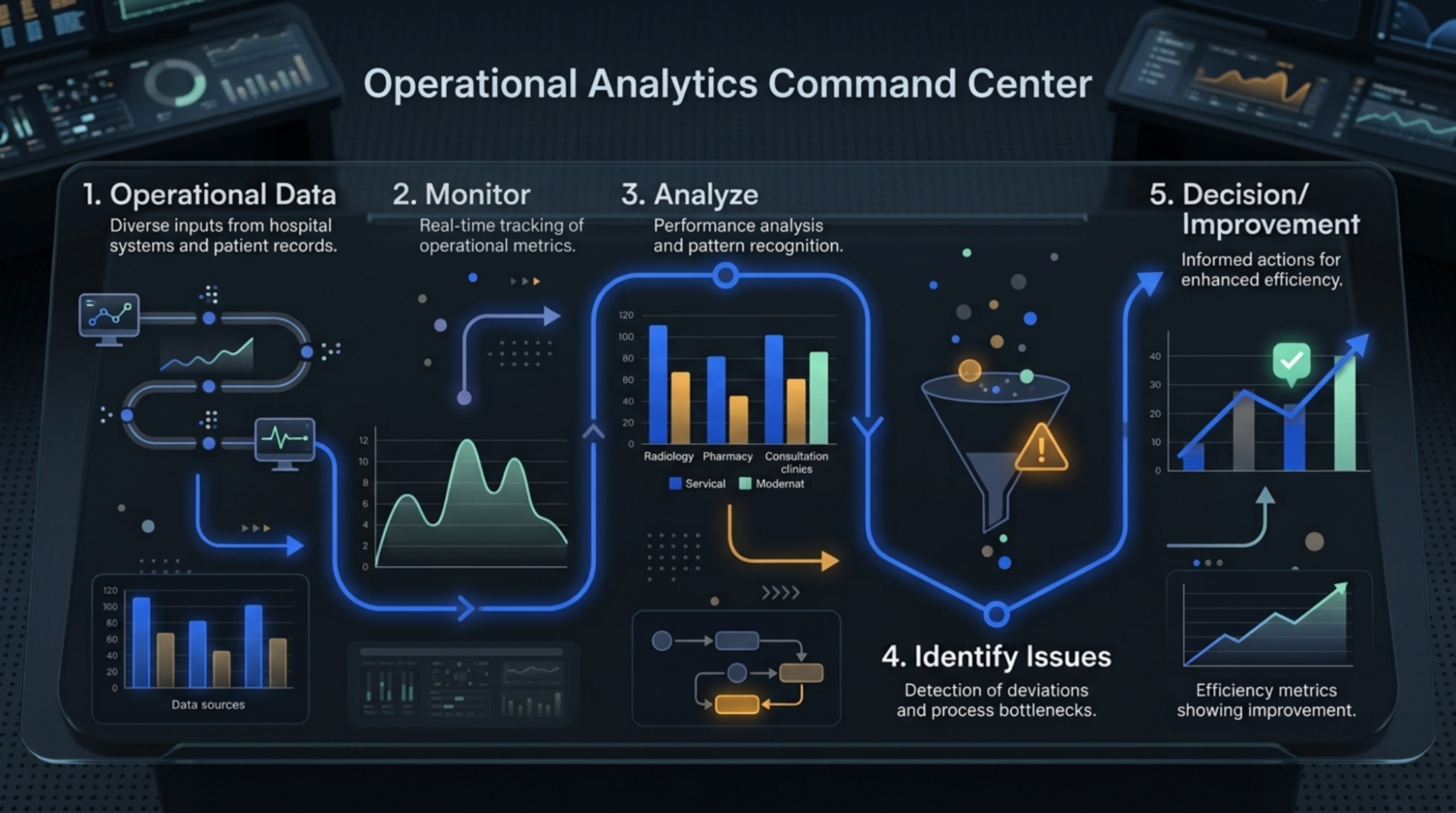
Operational analytics can help healthcare organizations monitor service performance, queue activity, workload, patient flow, and other operational information to support better decision-making.
-
Collect Operational Information -> Gather information from queues, services, staff activities, and other operational processes.
-
Monitor Service Performance -> Review how healthcare services are operating.
-
Monitor Queue Activity -> Review queue volume, waiting time, and patient flow where available.
-
Review Workload -> Understand activity and workload across services or departments.
-
Support Decision-making -> Use operational information to identify areas that may require attention or improvement.
AI and Automation Concepts
AI & Automation Concepts - Clinical concepts
AI-related clinical concepts can support healthcare professionals and patients by assisting with healthcare information and clinical workflows. Possible concepts include: AI Triage - Supports initial patient assessment and helps identify the appropriate healthcare pathway. AI Health Assistant - Provides automated health-related guidance or information where supported. Clinical Information Assistance - Helps users access or organize relevant healthcare information. Patient Support - Supports patients in understanding services and navigating their healthcare journey. These should be documented as AI concepts or supported features only when confirmed in the deployed NironCare system.
AI & Automation Concepts - Operational concepts
AI and automation can potentially support hospital operations by reducing repetitive work and helping staff manage information. Possible concepts include: Queue Assistance - Support patient flow and queue management. Administrative Assistance - Reduce repetitive administrative tasks where supported. Data Analysis - Help analyze operational information and identify patterns. Automated Notifications - Support communication and reminders. Workflow Assistance - Help staff manage repetitive steps in healthcare workflows. The exact AI and automation capabilities should follow the features available in the deployed NironCare system.
Product Roadmap
Product Roadmap Overview - Foundation
The foundation stage focuses on establishing the core NironCare platform and healthcare services. Core healthcare applications Patient and healthcare professional services Hospital administration Queue and appointment management Healthcare information management Basic reporting and operational support Build Core Platform -> Connect Essential Services -> Support Daily Healthcare Operations
Product Roadmap Overview - Expansion
The expansion stage can focus on extending the platform's healthcare services, integrations, analytics, and user capabilities. Expand healthcare services and modules. Connect additional healthcare systems or services. Improve analytics and reporting. Extend digital patient and healthcare professional services. Enhance operational workflows.
Product Roadmap Overview - Longer term
Longer-term development may focus on improving the connected digital healthcare ecosystem and introducing additional capabilities as the platform evolves. Possible areas may include: More advanced analytics. Expanded AI and automation. Broader system interoperability. More connected healthcare services. Improved patient and healthcare professional experiences. Further digital transformation of healthcare operations.